
Nos étudiants en Erasmus : Maëlys revient sur son expérience à Bologne
Formation ouverte à l'international, partenariats internationaux, stages à l'étranger, faisons le point sur la dynamique internationale de l'ESBS !
Formation ouverte à l'international, partenariats internationaux, stages à l'étranger, faisons le point sur la dynamique internationale de l'ESBS !

Ouverture de la campagne de versement le 26 mai 2026

Sensibiliser la communauté étudiante via une compagnie de théâtre-forum avec la compagnie Synergies Théâtre.

Nouvelle année universitaire et nouveaux étudiants.

L’ESBS ferme ses portes pour les congés d’été.

Projets académiques, réalisations & engagements de l'ESBS : zoom sur une école qui rayonne !

Les étudiants ambassadeurs parlent de l'ESBS !

Les étudiants internationaux parlent de l'ESBS !

Un cours "Project New Business" à l'ESBS et un prix à la clé...

Formation ouverte à l'international, partenariats internationaux, stages à l'étranger, faisons le point sur la dynamique internationale de l'ESBS !

Formation ouverte à l'international, partenariats internationaux, stages à l'étranger, faisons le point sur la dynamique internationale de l'ESBS !
Les étudiants internationaux parlent de l'ESBS !
L’École supérieure de biotechnologie de Strasbourg a appris avec une profonde émotion le décès du Professeur Pierre Chambon, cofondateur de l’ESBS.
Formation ouverte à l'international, partenariats internationaux, stages à l'étranger, faisons le point sur la dynamique internationale de l'ESBS !

Découvrez celles et ceux qui développent et imaginent les biotechnologies de demain.
“As a former student at INSA (National Institutes of Science and Technology) and technology degree graduate, I chose ESBS in order to achieve an Engineering Diploma in Biotechnologies. Thanks to its trinational program and multidisciplinary environment, this school offers to us, its students, an excellent opportunity to thrive in a promising sector.”
“After obtaining my baccalauréat S (Science stream), I got a technology degree in bioengineering, I had the chance to do my technology degree internship in a research lab within the ESBS. That is when I discovered the school’s environment and the program, which offers solid skills in the field of biotechnologies. The geographical localization of the school is ideal, at the heart of the Bio-valley, that really was a key element in my course choice."
“After my baccalauréat S (Science stream) and before joining ESBS, I started a preparatory class with an emphasis in biology in Montpellier Polytech. ESBS was really my top choice, thanks to its trinational program but also thanks to the double-diploma. Moreover, we can put into practice our theorical knowledge in the practical courses in labs, which were really interesting by the way!"
"An experience that opens you up to the world: biotechnology is not just about plasmids and molecular biology. It is a multidisciplinary field that helps us understand the world we live in, from bioinformatics to environmental chemistry, from pharmaceuticals to the agri-food industry — biotechnology is everywhere. Thanks to its network and its cosmopolitan student cohorts, ESBS allows us to develop a very broad perspective and to orient our careers towards many fields and places around the globe.”
“What made me choose ESBS, and what remains its greatest strength in my opinion, is the diversity of students’ academic backgrounds upon admission. Unlike most engineering schools, ESBS even offers opportunities to students coming from BTS programs, as was my case. I was therefore able to join this program and interact with other students who truly came from all kinds of backgrounds (BCPST/PC preparatory classes, bachelor’s degrees, DUT, BTS, as well as German and Swiss students).”

Remise des diplômes ingénieurs en biotechnologie - promotion Dominic Hoepfner (2024)

Remise des diplômes (promotion 2024) - Présentation du parrain, Mr Dominic Hoepfner

Remise des diplômes Master en biotechnologies (promotion 2024)

Remise des diplômes ChemBiotech - promotion Aude Bernheim (2024)

Remise des diplômes ChemBiotech - promotion François Deryckère (2025)

Remise des diplômes ingénieurs en biotechnologie - promotion Isabelle Mansuy (2025)

Remise des diplômes Master en biotechnologies (promotion 2025)

Présentation de l'ESBS par le Directeur, Pr. Dominique Bagnard, à l'occasion de la journée portes ouvertes 2026
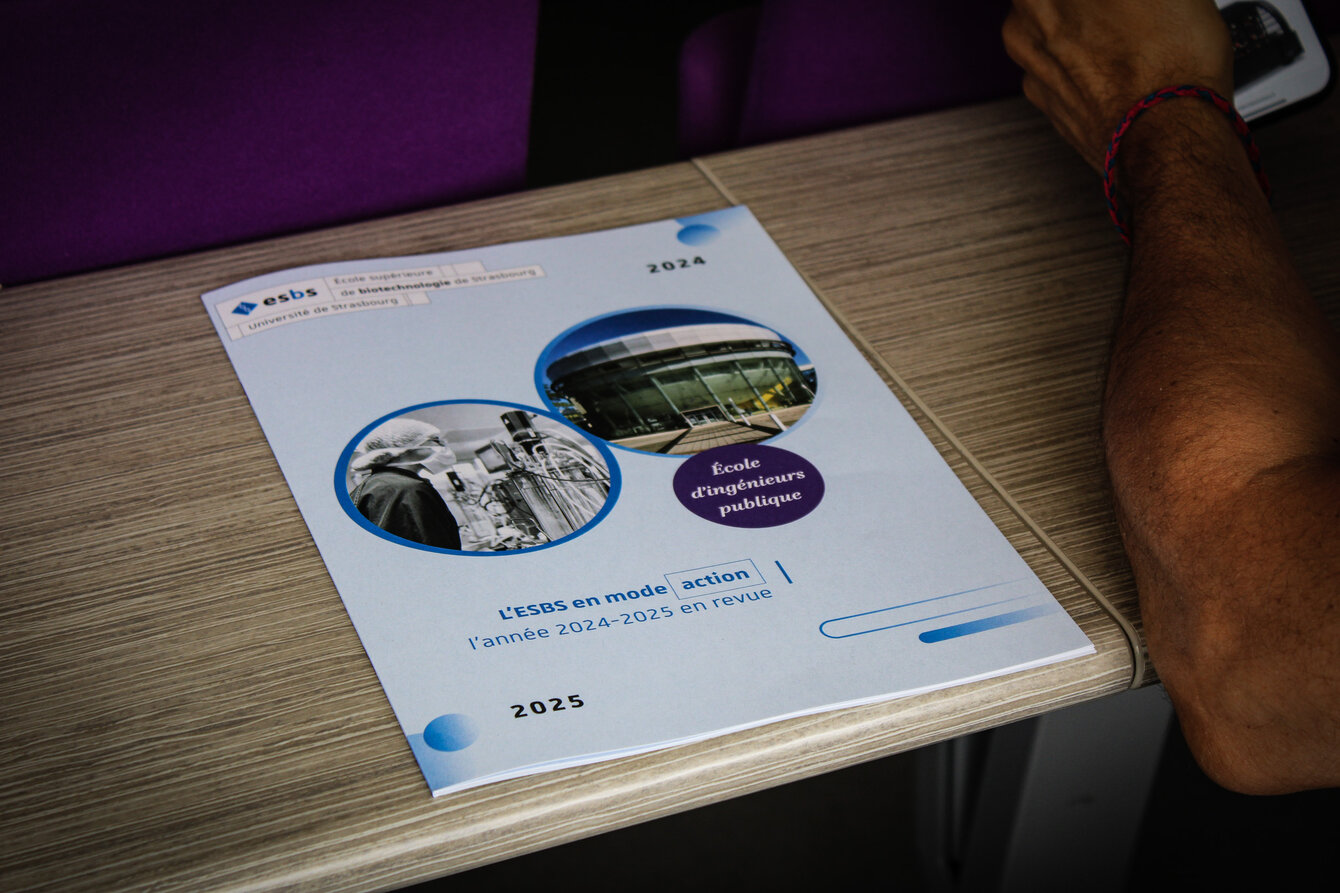
Assemblée générale de l'ESBS (2025)
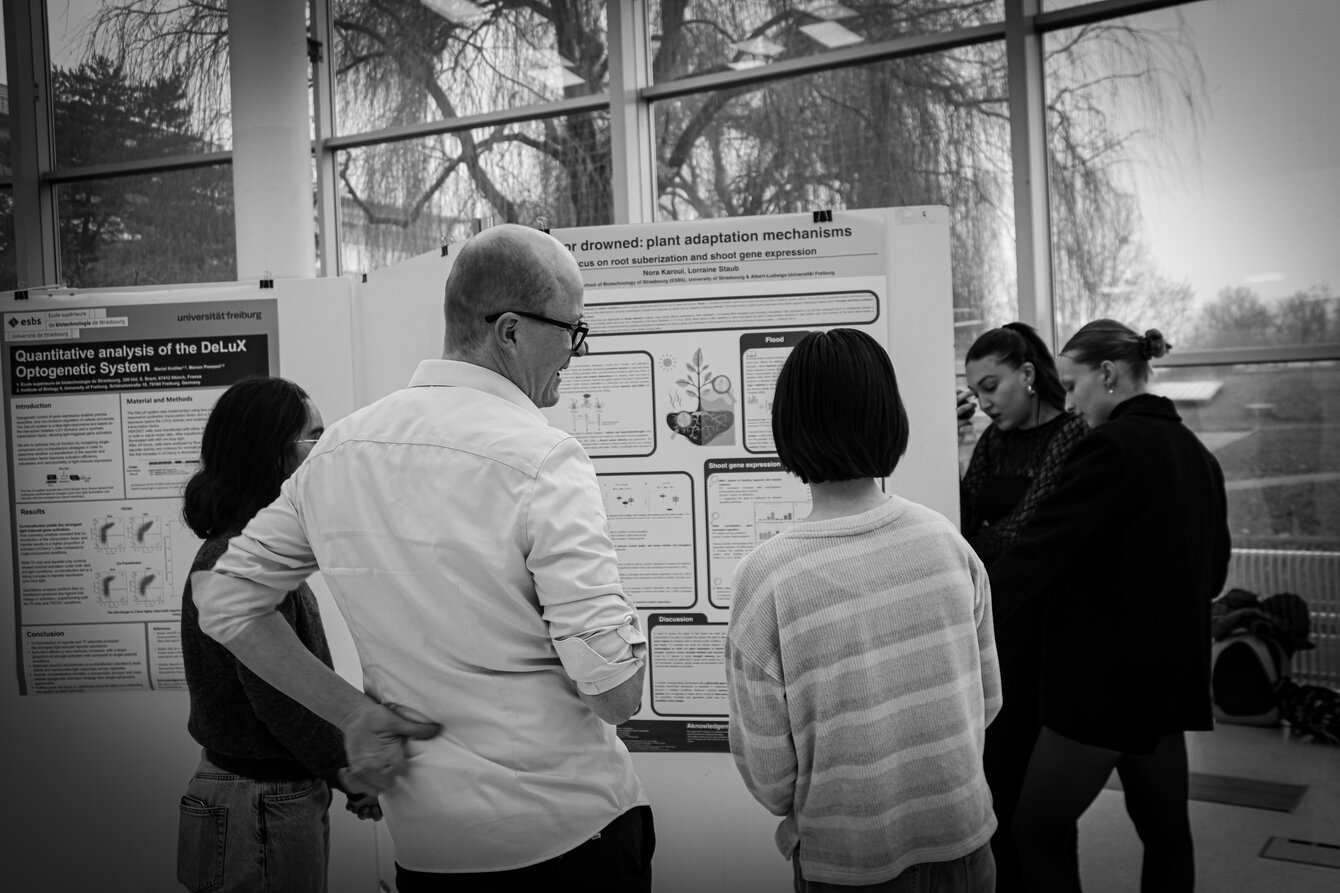
Présentation des posters par les 3A BT - promotion Sjon Hartman (2026)
This training matches with an eco-friendly approach of our professional activity as engineers. As I was aware of the current environmental problems, I wanted to learn more about these issues in the field of biotechnologies, but also to strengthen my knowledge about it. It was also about developping an extra-skill and putting into practice a carbon footprint in corporate activities.
The 360° diagnosis allows to identify the available levers in order to adopt an eco-friendlier approach in our work. Use it while doing our internship for example, takes very little time and is a real bonus! According to me, the carbon footprint evaluation is the corner stone of this University Degree in Environmental Engineering because we can highlight an important, useful and relevant skill in the job market.
People are becoming more and more aware about carbon footprint, and it will become mandatory at some point in the future. Therefore, this University Degree in Environmental Engineering takes on its full meaning while looking for an internship or a job. We can easily use the methodology for other tasks than the engineering activity in order to be useful in a larger but still interesting range of actions for companies: heating/lighting, work method improvement, carbon footprint, procedures comparison and optimization, etc.