

Research Corner : focus sur Philomène Fraulob, Doctorante au sein de l'UMR 7242
De la recherche à l'impact, zoom sur les travaux d'une doctorante au sein de l'Unité Mixte de Recherche 7242 hébergée à l'ESBS
De la recherche à l'impact, zoom sur les travaux d'une doctorante au sein de l'Unité Mixte de Recherche 7242 hébergée à l'ESBS

Formation ouverte à l'international, partenariats internationaux, stages à l'étranger, faisons le point sur la dynamique internationale de l'ESBS !

48 heures pour relever un défi autour de la bioproduction

Les étudiants ambassadeurs parlent de l'ESBS !

Franc succès pour la journée portes ouvertes 2026
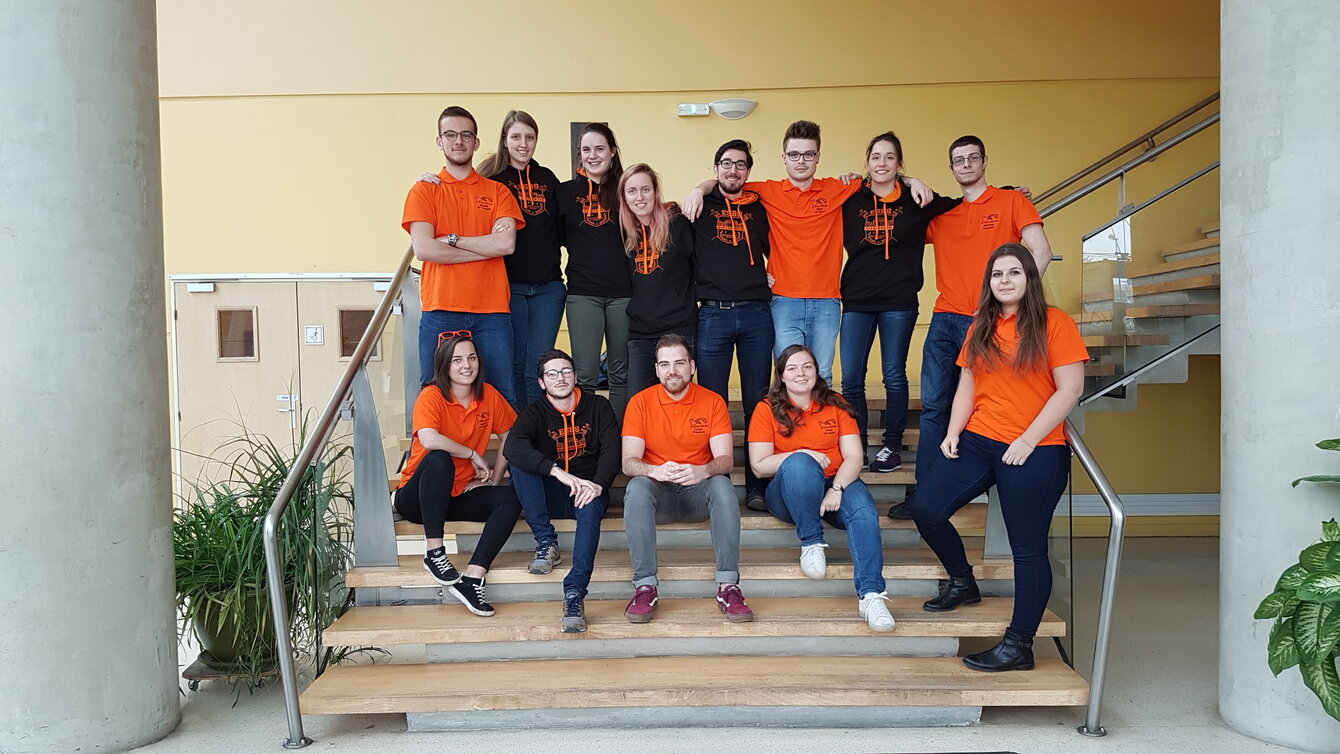
Les étudiants ambassadeurs parlent de l'ESBS !

Les dates à inscrire dans vos agendas pour ne pas manquer vos opportunités d'avenir à l'ESBS !

De la recherche à l'impact, découvrez les approches de microfluidique et de microfabrication pour des applications biologiques et biomédicales !

La dynamique d'amélioration continue au cœur de notre démarche qualité

Vers une année d’innovation et d’excellence scientifique

Belles fêtes de fin d'année !

Un projet vidéo qui lui a permis de décrocher le Prix Bartholdi !

L'ESBS, dauphine du classement des meilleures écoles d'ingénieurs en biologie 2026.

Nouveau mandat de cinq ans à compter du 01 janvier 2026.

De la recherche à l'impact, découvrez le rôle fascinant des métaux dans la structuration des communautés microbiennes — nos microbiotes !

Venez rencontrer Serena Petracchini, CSO & Co-fondatrice de la start-up Papilio.Bio !
“As a former student at INSA (National Institutes of Science and Technology) and technology degree graduate, I chose ESBS in order to achieve an Engineering Diploma in Biotechnologies. Thanks to its trinational program and multidisciplinary environment, this school offers to us, its students, an excellent opportunity to thrive in a promising sector.”
“After obtaining my baccalauréat S (Science stream), I got a technology degree in bioengineering, I had the chance to do my technology degree internship in a research lab within the ESBS. That is when I discovered the school’s environment and the program, which offers solid skills in the field of biotechnologies. The geographical localization of the school is ideal, at the heart of the Bio-valley, that really was a key element in my course choice."
“After my baccalauréat S (Science stream) and before joining ESBS, I started a preparatory class with an emphasis in biology in Montpellier Polytech. ESBS was really my top choice, thanks to its trinational program but also thanks to the double-diploma. Moreover, we can put into practice our theorical knowledge in the practical courses in labs, which were really interesting by the way!"
"After completing my two-year preparatory class BCPST (Biology, Chemistry, Physics and Geoscience), I decided to choose an engineering school in the field of biotechnologies. With its trinational program, ESBS makes the difference with the other schools. The teaching classes are in English and the weeks of practical work in Basel and Freiburg really are a unique opportunity to perfect our English and meet research teams in their lab."
I chose the ESBS for its teachings in English and its trinational curriculum (weeks of practical courses in Basel and Freiburg). Holder of a technology degree in bioengineering, ESBS allowed me to broaden my knowledge of genetic engineering, immunology, bioproduction or even in bioinformatics. My goal would be to put these skills and knowledge into practice, in innovative therapies (immunotherapies, genetic therapy, cellular therapy, etc.)
"I initially did two years of BCPST preparatory class and then got enrolled in ESBS by passing the Polytech joint entrance exam. After all the theoretical knowledge I learnt in the preparatory class, it was pretty easy for me to discover the world of biotechnologies and everything around it during these three years at the ESBS. The multiple practical courses and group projects allow us to familiarize with the lab work and finding out what career path we’d like to pursue."
"While I was doing my Advanced Technician’s Certificate in Biotechnologies, I knew I wanted to become an engineer. ESBS allowed me to mature my curriculum rather “technical” thanks to a rich program that leans towards the practical dimension and theoretical one around the field of biotechnologies. We have been able to develop key multidisciplinary skills through mini group projects that focused on biotechnological innovation and issues. Thanks to the internships we did, I realized how beneficial it was for me to evolve in a trinational context, which is actually an asset on the employment market."






This training matches with an eco-friendly approach of our professional activity as engineers. As I was aware of the current environmental problems, I wanted to learn more about these issues in the field of biotechnologies, but also to strengthen my knowledge about it. It was also about developping an extra-skill and putting into practice a carbon footprint in corporate activities.
The 360° diagnosis allows to identify the available levers in order to adopt an eco-friendlier approach in our work. Use it while doing our internship for example, takes very little time and is a real bonus! According to me, the carbon footprint evaluation is the corner stone of this University Degree in Environmental Engineering because we can highlight an important, useful and relevant skill in the job market.
People are becoming more and more aware about carbon footprint, and it will become mandatory at some point in the future. Therefore, this University Degree in Environmental Engineering takes on its full meaning while looking for an internship or a job. We can easily use the methodology for other tasks than the engineering activity in order to be useful in a larger but still interesting range of actions for companies: heating/lighting, work method improvement, carbon footprint, procedures comparison and optimization, etc.